Skip to content

Nuchal Translucency (NT) Scan: Early Screening for Baby’s Health

Get peace of mind with a Nuchal Fold Scan. This safe, non-invasive ultrasound screens for genetic conditions early in pregnancy. Understand your results with expert guidance.

What is a Nuchal Fold Scan?

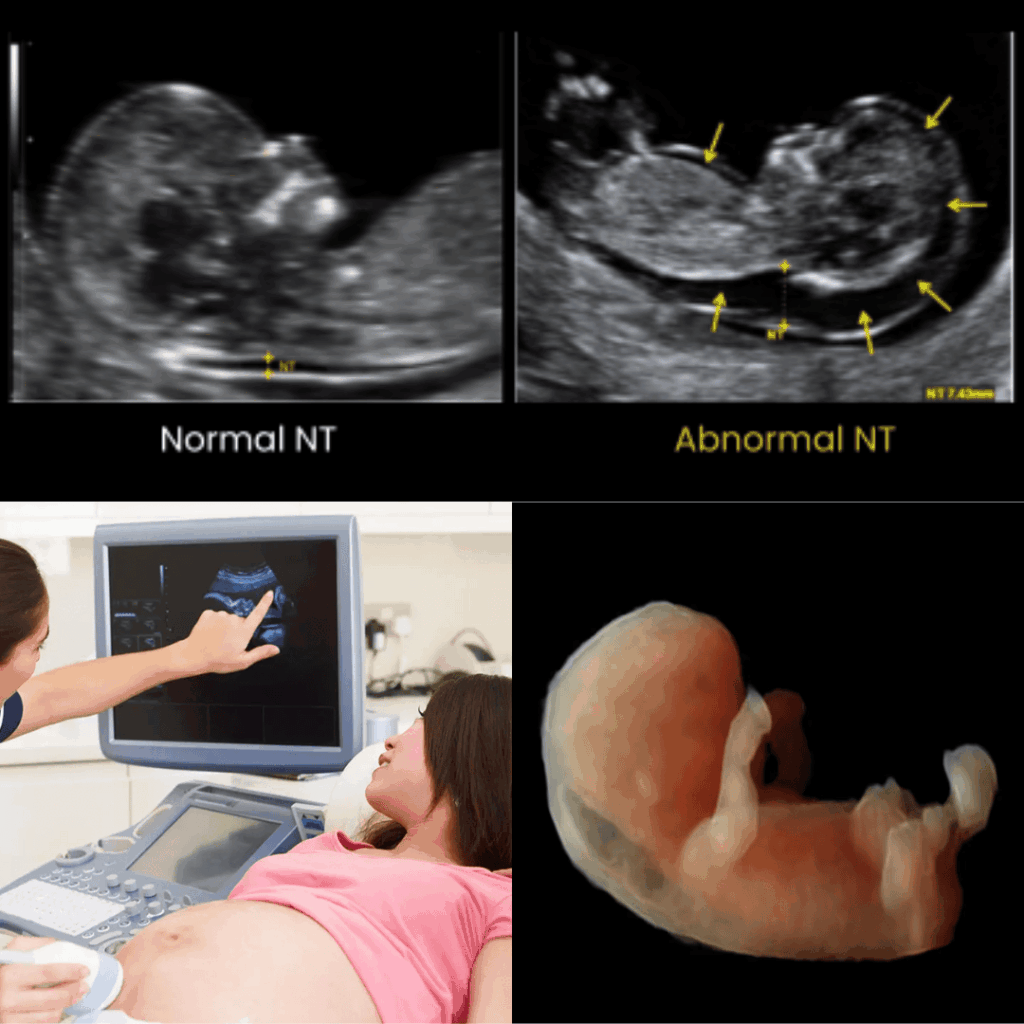
A nuchal fold scan, also known as a Nuchal Translucency (NT) scan, is an early pregnancy ultrasound performed between 11 and 14 weeks to measure the fluid-filled space at the back of the fetus’s neck. An increased measurement can indicate a higher risk for certain chromosomal abnormalities, such as Down syndrome, as well as other genetic disorders and some heart defects. It is a non-invasive procedure that provides information for parents and doctors to consider, and it is often combined with a maternal blood test for a more accurate risk assessment.

nuchal-fold-scan-malaysia

When is the Right Time to Do an NT Scan?

Timing is absolutely critical for the NT scan. It must be performed during a very specific window in your pregnancy:

  • Between 11 weeks and 13 weeks plus 6 days of gestation.
  • When your baby’s crown-rump length (CRL) measures between 45mm and 84mm.

Why is the timing so precise? Before 11 weeks, the baby is too small to obtain an accurate measurement. After 14 weeks, the lymphatic system develops, and the excess fluid is naturally absorbed, making the nuchal translucency measurement unreliable. Adhering to this narrow timeframe ensures the results are valid and meaningful.

Pregnancy & Fertility
Scans

From early pregnancy to 5D scans, experience maternity care enhanced by the Flabee Care App.

Frequently Asked Questions (FAQs) About the Nuchal Fold Scan

1. Is the NT scan mandatory?

No, it is an optional screening test. The decision to have it is a personal one, and you should discuss the pros and cons with your healthcare provider.

When combined with the first-trimester blood tests, it can detect about 85-90% of babies with Down syndrome, with a 5% false-positive rate.

It is usually too early to determine gender reliably via an NT scan. This is typically done at the 20-week anatomy scan.

The sonographer may ask you to cough, change position, or take a short walk to encourage the baby to move. Sometimes, a follow-up appointment may be needed.

No. A low-risk result significantly reduces the chance of the specific conditions screened for (Trisomy 21, 18, 13), but it cannot rule out all possible birth defects or genetic conditions.

Yes, and it is particularly important in twin pregnancies. Each baby will have their own NT measurement taken.

Besides chromosomal issues, a large NT can sometimes be associated with congenital heart defects and other rare genetic syndromes.

Yes, because while the baseline risk is lower, chromosomal abnormalities can occur in pregnancies of women of all ages.

The Non-Invasive Prenatal Test (NIPT) is a blood test that analyzes fetal DNA in the mother’s blood. It is a more accurate screening test for common chromosomal conditions but is often more expensive. Many women choose to have both, or their doctor may recommend one over the other based on their situation.

It is typically performed at specialized prenatal diagnostic centers or maternal-fetal medicine departments by certified sonographers and doctors.

Disclaimer: This article is intended for informational purposes only and does not constitute medical advice. Always consult with your qualified healthcare provider or a genetic counselor to discuss your individual circumstances, test results, and any concerns you may have about your pregnancy.

Translate »